ISO 9001-2008, ISO 17100:2015 & ISO 27001 CERTIFIED
ISO 9001-2008, ISO 17100:2015 & ISO 27001 CERTIFIED
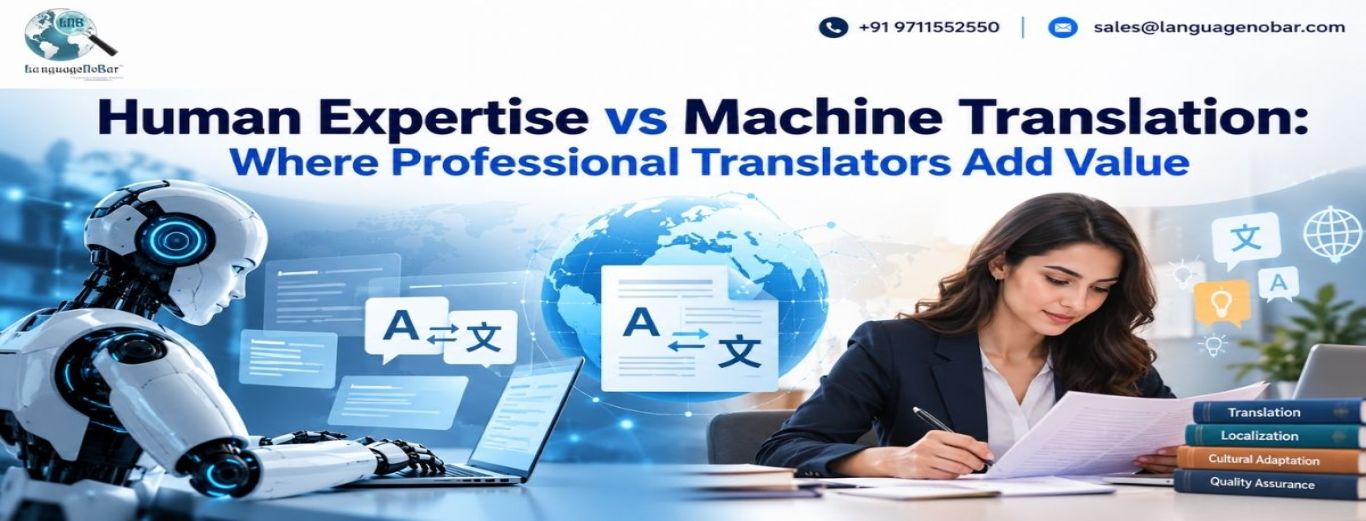
The development of machine translation technologies has changed the language industry. Companies are using AI-powered translation tools and services to localize thousands of texts within seconds. However, despite the popularity of automated language models, professional translators still have a strong impact on the quality of results.
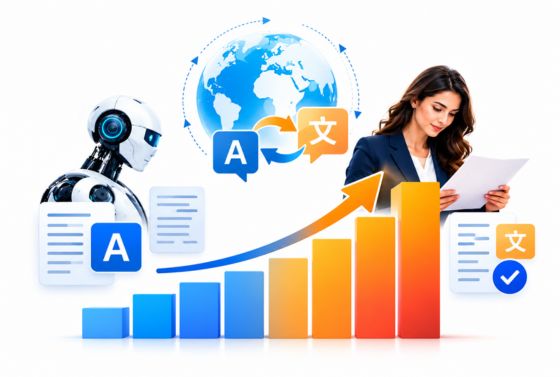
The key advantage of language translation services lies in the opportunity to combine technology with human expertise. While machines can achieve higher levels of productivity, experienced linguists can ensure the precision and naturalness of the final message.
Modern machine translation relies on the progress of technologies like artificial intelligence, deep learning, and language modeling. Unlike language models of the past, current tools can handle complex translation tasks with multiple contextual and grammatical nuances.
Overall, businesses turn to machine translation tools and services because they tend to offer lower costs and higher productivity. For example, companies can use an automated language model to localize an extensive database of product descriptions, documents, and recurring texts.
At the same time, the speed of AI-based solutions comes at a cost. Although such programs can perform the task of data localization with unparalleled accuracy and productivity, the resulting message might sound unnatural and incorrect.
This issue calls for the expertise of professional human translators to ensure the accuracy of the results.
When it comes to localization, context often matters more than anything else. Substitution of words and phrases from one language to another might work in particular cases but fail when it comes to technical, legal, marketing, medical, financial, and software localization.
To translate technical and business-related content, firms often need to work with experts who know what terms and phrasing to use in a specific field. The process of choosing the right words and expressions can only be mastered through years of experience and practice.
Moreover, professional translators understand how to maintain the source message’s context and meaning. By looking at the bigger picture, they can get a better grasp of the intended meaning and remove ambiguity.
Likewise, human translators allow firms to keep their tone and communication strategy in all marketing and business-related materials and documents. Every company has a unique voice that speaks to clients, partners, suppliers, and other stakeholders in a particular way depending on the setting.
While AI-based language models tend to fail at removing excessive formalism and unnaturalness, human translators can edit the text to improve readability and make it easier to be understood by customers.
In fact, such materials are ideal for localization since they are designed to communicate a clear message to a large audience. If the target audience understands what the message is about, there is little purpose in keeping the text literal.
Instead, professional linguists will make the text sound natural and local while preserving the central idea and the intended effect.
Finally, the adaptation to the local market and audience is often the deciding factor in building a strong presence in a foreign market. Not every concept, nuance, and nuance translates directly. In many cases, a local audience will not understand several references that make perfect sense in another market.
A skilled professional will be able to determine what to change and what meaning to convey to get the desired effect without sacrificing the essence of the message. In other words, the linguist will ensure that the localized text is not just readable but also meaningful with an emphasis on cultural competencies.
Localizing a specific market also has a lot in common with the concept of translation. First of all, it is important to build localization around the language and cultural features of the local audience. Then, professional human translators can help adjust the wording, meanings, and messages to fit the local context.
The role of professional linguists becomes more crucial when it comes to such content as legal, technical, financial, and medical texts. Such materials tend to use specific terminology that can require additional explanation in the target language due to differences in the level of development of certain areas of the local economy.
Therefore, the combined effort of an AI-based language model and a professional human translator seems to be the best option for translating technical content. The machine can put across the general idea, while the human expert can edit the text to ensure that no aspect is unclear or misinterpreted.
In addition, professional human languages often have the resources to edit already translated content. This means that regardless of the initial language model, a native speaker who knows the client’s business and industry can review the document and fix any errors. It is the human review that ensures that there are no errors in accuracy, grammar, terminology, message, brand voice, context, and semantics – especially when it comes to critical and business-oriented texts.
Ultimately, professional human translators have the resources and qualifications to offer their clients editing and language services. Their experience across different industries and fields allows them to deliver better results through quality control, precision, and thoroughness. All in all, when it comes to the importance of professional translators for businesses, their role can hardly be overestimated.
Overall, businesses have two options for multilingual translation and localization: machines and men. Both approaches to translation have their advantages and disadvantages that have to be considered when choosing an optimal solution for a business. The choice between an AI-powered language model and a team of professional human translators and editors will depend on the company’s needs, objectives, and available resources.
From one point of view, machine translation offers higher accuracy, speed, and cost-effectiveness, especially when it comes to large-scale projects and high-volume content. As a result, companies can deliver better localization results with a larger message scope without increasing the costs.
Meanwhile, human translators prove to be better at understanding and delivering the context behind the message and voice. They will be better at adjusting the tone of the text, eliminating unneeded or unintended wording, and fixing meaning and clarity issues. Moreover, human translators are essential to adapt language and communication approaches in accordance with the target audience.