ISO 9001-2008, ISO 17100:2015 & ISO 27001 CERTIFIED
ISO 9001-2008, ISO 17100:2015 & ISO 27001 CERTIFIED
In a global economy, communication in different languages is vital to engage foreign customers and promote business growth. Companies deal with various documents and files that require proper translation. The professional translation services provide quality results by working on the documents at appropriate stages.
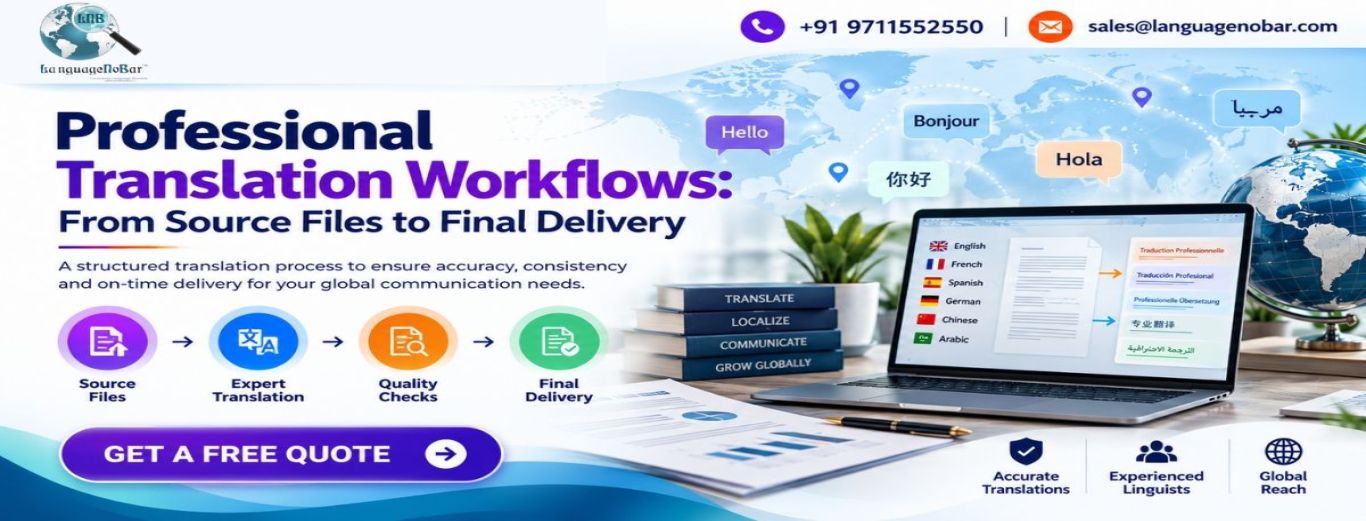
The translation process entails a series of procedures needed for businesses to acquire reliable multilingual content. These steps enable companies to know how to approach the task of localizing material in different languages and target their needs accordingly.
A company’s project manager or translator should learn the basics involved in professional translation. The process has distinct phases that affect how the document will be handled throughout the whole procedure.
The first step is to collect and assess the information that needs translating. Some files may contain a mix of text and graphics, so it is important to note such attributes. A competent translation company will request the original files to ensure accuracy. The linguist will have a better chance to meet the expectations of the project according to the following details:
• Languages: The translator should be familiar with the language of the source and target texts. If the content is technical, it will require someone professional and qualified in the field.
• Type of Original Files: It is important to have the editable versions of the original text for smoother production. When the source files are images, it will be necessary to extract the text for accurate translation.
• Text Length: A company will charge its clients depending on how long the text is. The size of the file will determine how much time the linguist will utilize translating the information.
• Target Audience: The translator will consider the intended audience for the material.
During this stage, the project manager may find some difficulties such as complex text structures, special characters, images, specific terms, and other issues.
A good understanding of the text to be translated will save the business and the company time and effort down the line.
The second phase deals with getting the document ready for translation. In this situation, it is always essential to go with editable documents to avoid complications like OCR errors. The translation professional will extract the desired content from the text files with the help of software to get appropriate results.
Depending on the document’s nature, the linguist may apply CAT tools for faster translation. These computer-assisted tools store the translated words and phrases retrieved from the text. It is important to ensure that the layout and design of the original text are separated to avoid confusion.
Depending on the needs of the business, translation professionals will use different methods to handle the text. During this phase, the linguist will make sure the meaning and message of the source text have been preserved in the target document. Unlike literal or word-for-word translation, professionals will focus on translating based on context.
A competent agency will provide its clients with the best linguists that possess the relevant skills in language and the subject matter of the document. They may utilize translation memories and style guides to aid in the production of high-quality work without compromising the meaning.
The translated text may either be reviewed by an editor or a professional proofreader depending on the agreement between the business and the agency. If the two parties decide that both an editor and proofreader will participate, a second linguist will go through the text to ensure that it has been proofread and edited appropriately. At this point, the linguist should consider the following issues:
• Inconsistencies in terminology and style
• Missing phrases and sentences
• Grammatical mistakes
• Omission of text
• Inappropriate tone and expression
They should also check if the translated content suits the purpose and audience. They may request a revision if the document requires further editing.
The linguistic review process is not always the same. It varies depending on the types of content, level of risks involved, and the budget a company is willing, to spend.

Linguistic reviews do not include everything that needs to be done to finalize a project. There are several other tasks involved that could be regarded as proofreading, editing, formatting, and desktop publishing. The linguist might need to go through the material to ensure that there are no mistakes in figures, numbers, dates, punctuation, placeholders, hyperlinks, terms, and other issues.
Quality checks may be carried out using automated tools to detect any inconsistencies. The linguist will verify the correctness of the material to meet the standards of the organization. The file will also require desktop publishing to guarantee that everything is in place.
It will be vital to make sure the spacing and font size are consistent throughout the paper. Other technical aspects such as tables, graphics, and text should also be examined.
At this point, all the instructions provided to the linguist should have been implemented. When they have completed the process, their role will be to make sure that all the documents have been delivered, and the files are in their original form. A company should ensure that they have requested their clients to deliver the files they need in all the required formats such as DOCX, XLSX, PPTX, and PDF.
A project manager will then confirm that the delivered material meets the requirements set by the business. They can also check the necessary actions to take for their clients to get the right files. A professional team will also offer additional services such as providing terminology lists, translation memories, and other related needs if the business requires them.
It will be vital to inform the business about the delivery date when the linguist transfers the completed material to their destination. An appropriate method for delivering the final product to the client should be put in place for successful delivery.
A business should ensure that they have understood the professional translation process. Companies should utilize the services of professional linguists to ensure that they have the knowledge and experience to do the job with care. It will be vital to look for agencies to offer translation services for content such as web content, websites, and documents with complex terminologies.
A business needs to know if the translation company is experienced in handling such projects. A company should request more information about the translation agency before finalizing their choice.
Some aspects to bear in mind when choosing the best translation services include competence and experience. It will be vital to pick a firm that is conversant with the language and subject matter of the text. A professional business will ensure that the text is properly translated and delivered back to the business without any defects.
A company should get an idea of the confidentiality policy of the translation agency. The organization should also look at their file formats, level of experience, and how well they can meet a company’s specific needs. A good linguist will communicate their expectations and requirements clearly.
Translation professionals provide quality results by making sure they use proper translation processes. The above steps are vital for businesses to learn how the linguists will handle their projects. Companies can benefit from professional translation services to localize web content, web pages, and other materials for foreign customers.