ISO 9001-2008, ISO 17100:2015 & ISO 27001 CERTIFIED
ISO 9001-2008, ISO 17100:2015 & ISO 27001 CERTIFIED
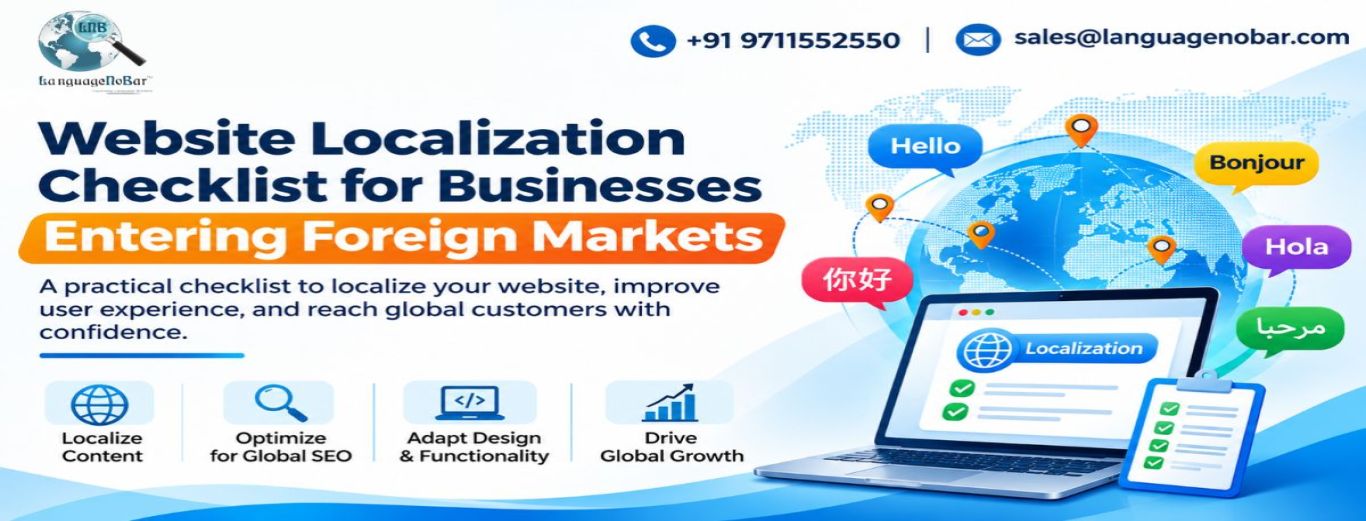
There are many exciting opportunities when expanding your business internationally. However, translation alone will not be enough to make your website appealing to an international audience. Businesses must ensure their website has been localized to appeal to local languages, cultures, customer expectations and search behaviors.
Website localization ensures your website has been localized to suit specific international markets. This can help you build trust, increase engagement, and make real connections with your international customers.
When expanding into an international market, ensure you have the following in place.
Firstly, decide which international markets you want to target. Decide which countries will have a demand for your products or services.
For example, if you are targeting European markets, you may want a version of your website in German, French, Spanish or Italian. Whereas if you are targeting Asia, you may require your website to be translated into Japanese, Chinese, Korean or other languages.
Consider customer demographics, buying behaviors, regional customer preferences and opportunities in the region. This will help you plan a realistic website localization strategy
One of the most important factors in localization is translating your website content with accuracy. However, translation isn’t always best-done word for word.
Ensure your content has been translated to include local sayings, references, vocabulary and language.
Your website content should include the following:
Home Page & Services
Product Descriptions
About Us
Landing Pages
FAQs
Call to Action & Contact Forms
Terms & Conditions
Professional website translation services will ensure your brand remains consistent, and your content will sound local.
When localizing your website ensures you implement an international SEO. Having your website translated may not be enough to get organic traffic due to not optimizing your content.
Rather than translating your current English keywords, research keywords in the local language. Search terms, intent and popular phrases can be vastly different between countries.
Ensure you have the following in place:
Local Keyword Research for All Markets
Meta Titles & Description
SEO Friendly URLs
Hreflang Tags
Alt Text
Optimized Content for Country
XML Sitemap
Implementing an effective international SEO strategy will ensure that search engines know which version of your website to display depending on the search.

Website design preferences can vary for different cultures. Depending on the colours, images, symbols, layout and navigation you use on your website, it may mean something different to your international audience.
Ensure your website has been designed to meet local expectations.
Check if it works for Right to Left languages like Arabic. Make sure your translations fit in with buttons and menus and that the local fonts show correctly.
Consider using local dates, address formatting, measurements, and currency. This will ensure your website is localized in a way that international customers will feel comfortable with.
Customers will be more likely to trust businesses if they offer familiar payment and contact options.
Ensure your prices are shown in the correct local currency and that you have relevant payment methods. Check shipping details, tax information, delivery times and returns policy for each target market.
Ensure you have local contact details such as local phone number, email and business addresses.
This will help create fewer barriers for customers to purchase.
Another key part of localizing your website is technical optimization.
Ensure that the different language versions work on desktop, tablets and mobile devices.
Check that your site loads quickly, there are no broken links, redirects, navigation, forms or internal links. Ensure you have unicode characters and that your localized content shows correctly.
Ensure you can switch between languages.
Each international market will have different cultural expectations, advertising standards and compliance.
Ensure your images, messaging, product claims and examples are suitable for your target audience.
Check what privacy laws, cookie compliance, accessibility, consumer protection and any other compliance you have to follow.
Using professional localization experts and local people to review your website will help you avoid any cultural or language issues.
Once you have published your translated content, you should continue to monitor how your website is performing and look for ways to improve.
Ask native speakers to test your localized pages to ensure your translations are accurate, easy to read, easy to navigate and functional.
Once launched, monitor key metrics such as:
Organic Traffic from Target Countries
Local Keyword Rankings
Engagement
Conversion Rates
Bounce Rates
Enquiries & Sales from International
Use this to improve your localized content and international marketing strategy.
Expanding into foreign markets requires more than translating your website content. You need to ensure your content is accurate, culturally appropriate, optimized for international SEO, technical compatible and meets local customer expectations.
Having a website localization checklist in place will ensure your organization is ready for your international audience.
By using professional website localization services you will overcome language barriers, optimize your search presence globally, build customer confidence, and create stronger connections. A well localized website will become an important base to grow your business sustainably globally.