ISO 9001-2008, ISO 17100:2015 & ISO 27001 CERTIFIED
ISO 9001-2008, ISO 17100:2015 & ISO 27001 CERTIFIED
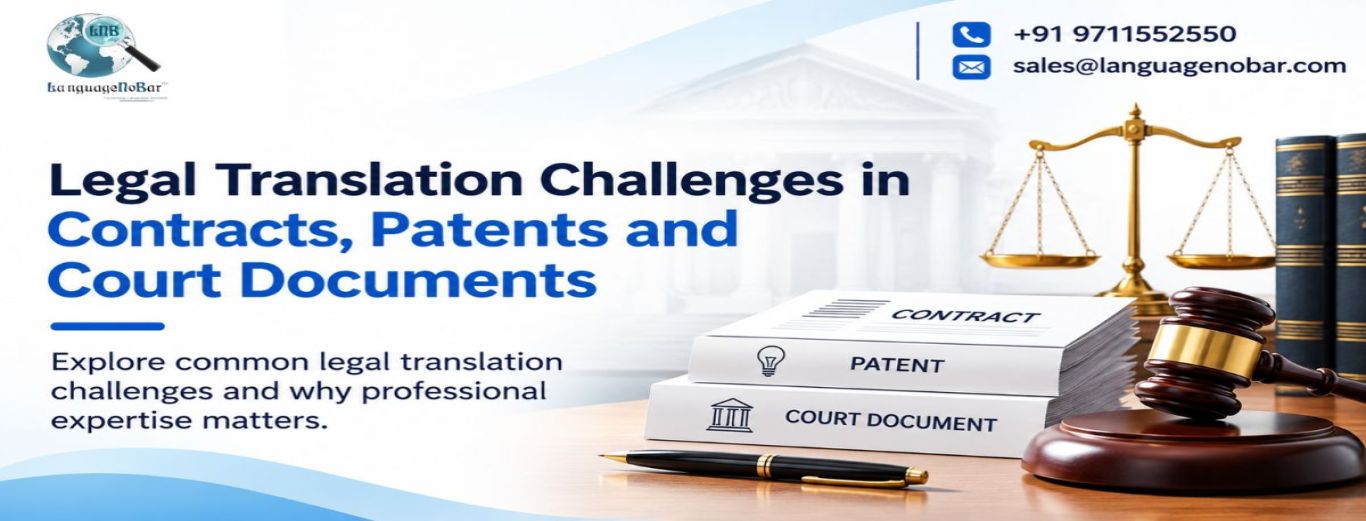
Legal documents play an important role in any business, intellectual property, international trade, and courts. By ensuring your legal documents are accurately translated, you can make sure that your message is being displayed correctly. If there is an error in a legal translation, this can cause confusion about the meaning of a clause, duties, and key information.
Using a legal translation services can ensure that people, law firms, businesses and organizations can communicate effectively and accurately with many different languages. However, there are challenges that come with translating legal documents including contracts, patents, and court documents.
Common challenges when translating legal documents include:
Contracts are created to create legally binding agreements between 2 or more parties. The contract will detail any duties, payments, obligations, rights, and how disputes will be handled. There are many challenges when translating.
Common challenges include:
Legal terminology – Contracts will often use legal terminology such as indemnification, liability, jurisdiction, arbitration and force majeure. These might not have direct translations, so the translator must know what they mean within the legal context.
Accuracy – All clauses within a contract need to be translated accurately. This can affect the payment, termination, confidentiality, and obligations in the contract.
Different legal terminology – Countries may be known to use different terminology, which means they may not translate as directly.
Using a professional contract translation service will ensure businesses can communicate with international partners, suppliers, clients, and stakeholders.
Patents are used to protect inventions, technology, and your intellectual property. Many of these documents will be quite technical and will have lots of legal terminology.
Major challenges include:
Technical/scientific terminology – You may need to translate engineering processes, chemical, medical technology, software and innovative products. The translator needs to know technical terminology and legal terminology.
Accuracy – Claims are important to know what you are protecting. If the wrong wording is used or terminology is not consistent, this can cause confusion.
Consistency – Patent applications need to have consistent terminology throughout. Patents can be lengthy with lots of descriptions, claims, abstracts, and supporting information.
Different Jurisdictions – Different countries and IP authorities may want different terminology.
Using a professional patent translation service will ensure the technical meaning is kept.
Court documents can be used during legal processes, investigations, immigration, and international disputes. These documents need to be carefully translated as this can affect how facts, statements, and legal points are seen.
Common challenges include:
Legal/procedural terminology – Court orders, affidavits, witness statements, judgements and petitions will all have their own terminology. The translator will need to understand the context.
Accuracy – Witness statements need to be accurately translated.
Formatting – Court documents may have numbered paragraphs, references, signatures, stamps and notes. Ensuring this is consistent in the translation will make it easy to review.
Certifications – Courts and government bodies may require certified translations or particular declarations. This will depend on the country, organization, and reason for submitting.
Using a professional court document translation service will ensure important legal information is clear.
Using professional legal translation services can help organizations with their complex legal documents.
Things to consider include:
Subject knowledge – Translator has knowledge in the legal subject.
Consistency – Legal terminology should be consistent to ensure accuracy in long documents and related documents.
Context – Knowing what the document is for and what jurisdiction can help prevent confusion from literal translations.
Proofreading – Ensures there isn’t any inconsistency in terminology, missing information, or formatting.
Confidentiality – Sensitive documents such as contracts, patent applications and court documents should have the correct level of confidentiality and document security.
This will help ensure your legal documents are accurately translated.
When a business begins to work internationally, they will often work with clients, legal professionals, regulators, and IP authorities from another country. This can cause confusion due to the difference in language and understanding obligations in contracts, protecting inventions, and legal processes.
Using an accurate legal translation service will ensure your businesses can communicate with those internationally. This will help prevent confusion from incorrect terminology. However, always check with the relevant authority/legal professional what certifications, notarizations and submissions are required.
Translating contracts, patents, and court documents can be challenging. Each will have their own issues to overcome. Using professional legal translation services can help businesses, law firms, and individuals communicate complex legal information across language barriers.