ISO 9001-2008, ISO 17100:2015 & ISO 27001 CERTIFIED
ISO 9001-2008, ISO 17100:2015 & ISO 27001 CERTIFIED
As companies grow globally, translation is more than just converting words from one language to another. At first a company with some translating to do might get away with freelancers, basic online tools or general-purpose translation software. But as the business grows and these ways of working become unwieldy, they can impact quality, consistency, compliance and customer experience.
Professional Translation Services provides a systematic approach to multilingual communication for multi-country companies. They use their language expertise, industry knowledge, quality assurance, terminology management, technology and project coordination skills to help with large-scale translation needs.
But how can you tell when your company has outgrown simple translation solutions?
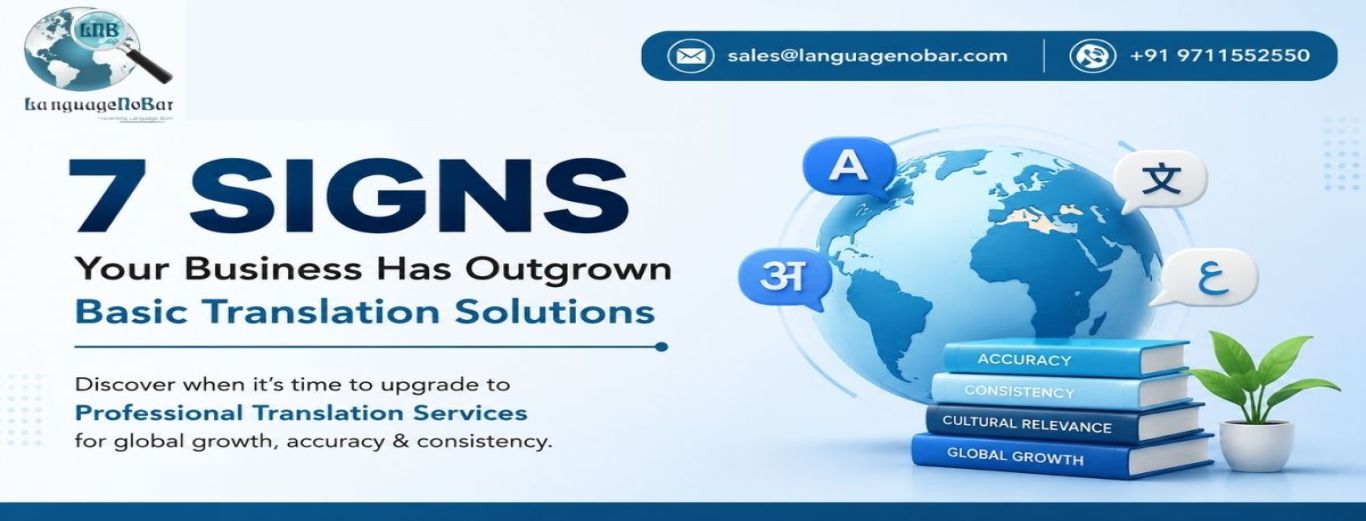
Here are 7 signs to watch for.
1. Your Volume of Translation is Growing Quickly
One early warning sign is a growing volume of content that needs translation.
A growing international company may require translation for:
Descriptions of products
Websites
Landing Pages
Marketing Campaigns
legal papers Instruction manuals
Training material
Programs and Applications Support content
Online classes
Product packaging Communication within the company
Some early stage handwritten docs might be workable. If you have to translate dozens or even hundreds of files on a regular basis, working with individual translators or simple tools can take a lot of time.
Professional Translation Services provides dedicated project management, translation workflows, quality checks, and scalable resources. This enables companies to handle growing volumes without compromising consistency or turnaround times.
2. You’re Learning More Than One Language
You can't compare translating content into a second language to running a multilingual operation.
If a company is entering many international markets, it may need translations in 10, 20, 50 or even hundreds of languages. Each market has its own language, culture, regulatory, and business requirements.
Sometimes it's not enough to just translate the same English into other languages.
Professional translation teams can utilize native linguists and subject-matter experts in multiple languages to guarantee consistency in terminology and brand messaging.
This is especially important for companies that conduct business in places like Europe, the Middle East and Asia, and Latin America.
3. The Irregular Use of Terminology Has Become an Issue
Is it true that different translators are beginning to use different terms for the same product, feature, or service?
This is a frequent issue for companies that work with many freelancers or translation tools that don’t talk to each other.
A company might use one term for a feature on its website and another term in its user manual. There may be inconsistent terminology in the regulatory documents and in the packaging and marketing materials of a pharmaceutical company.
This can mislead your customers and damage your brand’s credibility.
Professional Translation Services may use translation memories, glossaries, terminology databases and style guides to help maintain consistency across projects.
Core process for terminology management to ensure that key words, product names, technical terms, and brand language are translated consistently.
4. Your brand starts to suffer from translation mistakes
Small translation errors can be costly business problems in the content seen by the customer.
A bad translation of a headline, website page, product description or marketing campaign can make a business appear unprofessional. In some industries, a bad translation can have many more dire consequences.
For instance, technical, financial, medical, and legal content must be very accurate. A literal translation may not be understood in the way it was intended.
Professional translation services reduce such risks through hiring qualified linguists and the right review processes.
Depending on the content, a pro workflow could include: **Translation → Editing → Proofreading → QC
It’s a multi-step process that checks for linguistic errors, terminology inconsistencies, formatting, and context issues before content goes to customers.
5. Your Content Needs Industry Expertise
General translation is fine for simple everyday content, but specialized industries require specialized knowledge.
Imagine a pharmaceutical company translating clinical documentation. A general translator may know the language but not have enough knowledge about medical terminology or regulatory requirements.
The same applies to:
Legal service
Health Care
Finance
Manufacturing
Automotive
Information technology
Electric power
E-learning
Entertainment & Media Entertainment
Professional translation services can provide you with translators who have the right subject matter expertise.
This allows your content to be translated into another language and adapted to the terminology and expectations of the target industry.
6. You’re entering new markets and need localization
Translation and localization are linked, but not the same.
The purpose of translation is to transfer meaning from one language to another. Localization takes this step further and adapts the content to the cultural, linguistic, commercial, and regional expectations of the target market.
Local content will have to be adapted
Date and time formats Cash
Measures: Fontography Cultural references UI elements ads copy Billing Details
Terms used in the area
A marketing message that works in one country may not work in another.
Professional Translation Services can help localization strategies to enable businesses to build more natural, market appropriate experiences for international audiences.
7. Your team spends too much time on translation project management
The other big red flag is inefficiencies in operations.
Are your marketing, product, HR, legal, or operations teams always:
Request Quotes Find Translators sending a file manually Glossary of Terms Change Tracking review translation quality * Checking on deadlines *multi-versioning control Fix formatting problems
Today, translation is a project management problem.
Professional Translation Services can marry these activities with dedicated project managers, structured workflows, technology platforms, and quality-control processes.
Instead of managing multiple independent translators, you can have your in-house team work with a single, unified translation partner.
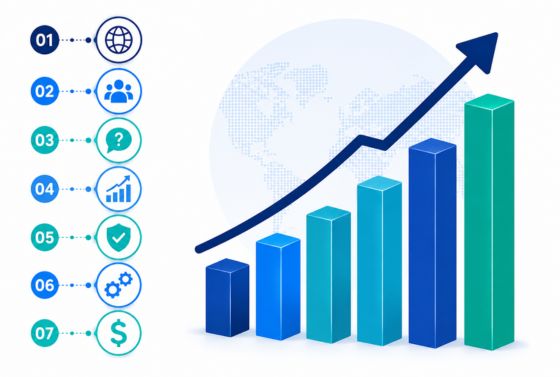
As a business expands overseas, professional translation is often required.
Cost and speed might be the first things that concern a small business. But others are gaining equal importance with its growing international presence:
Consistency Accuracy Scalability Industry Security Speed Know How
Professional Translation Services can assist companies in creating a process to repeat their multilingual content instead of treating each translation project as a one-off.
It's especially helpful for companies that publish content frequently on a variety of channels.
Determining What Translation Solution, You Need
Different companies have different translation support needs.
But if you only translate a few simple documents a year, a simple solution is fine.
But professional support is more helpful when you:
Multilanguage Requirement translation repetition Content-specific short deadlines international customers Lots of Content Brand language standards
Regulatory / compliance requirements Website localization needs diverse internal stakeholders
The more complicated your multilingual workflow, the more crucial a structured translation process. Choosing a professional translation partner
Companies looking for Professional Translation Services should look beyond the languages they offer.
Look at the providers:
Native Speakers Network
Professional linguists know the subtleties of language, the local idioms, and the real tone of conversation. Industry experience Pick translators who understand your industry and the terminology used in it. Quality control Ask for editing, proofreading, linguistic review and quality control Technology Translation memories, terminology management and computer assisted translation tools can enhance consistency and efficiency. Scalability
As your business expands, you need a provider that can support more languages and more content. When dealing with confidential business, legal, financial, medical or technical content you need to consider carefully security and confidentiality. Project management A project-management team manages communications, scheduling, file management and quality assurance.
What works for a handful of documents and one international market can quickly become unwieldy when your company is dealing with thousands of pages in multiple languages and regions.
If you have increased volumes of translation work, inconsistent terminology, quality issues, content needs, or more complex project management, your business has outgrown basic translation solutions.
Professional Translation Services offer language expertise, technology, quality control and scalability to help support your multilingual business growth.
It’s not just about translating more. It’s about how you communicate with your customers and partners in every market you serve, accurately, consistently, and effectively.