ISO 9001-2008, ISO 17100:2015 & ISO 27001 CERTIFIED
ISO 9001-2008, ISO 17100:2015 & ISO 27001 CERTIFIED
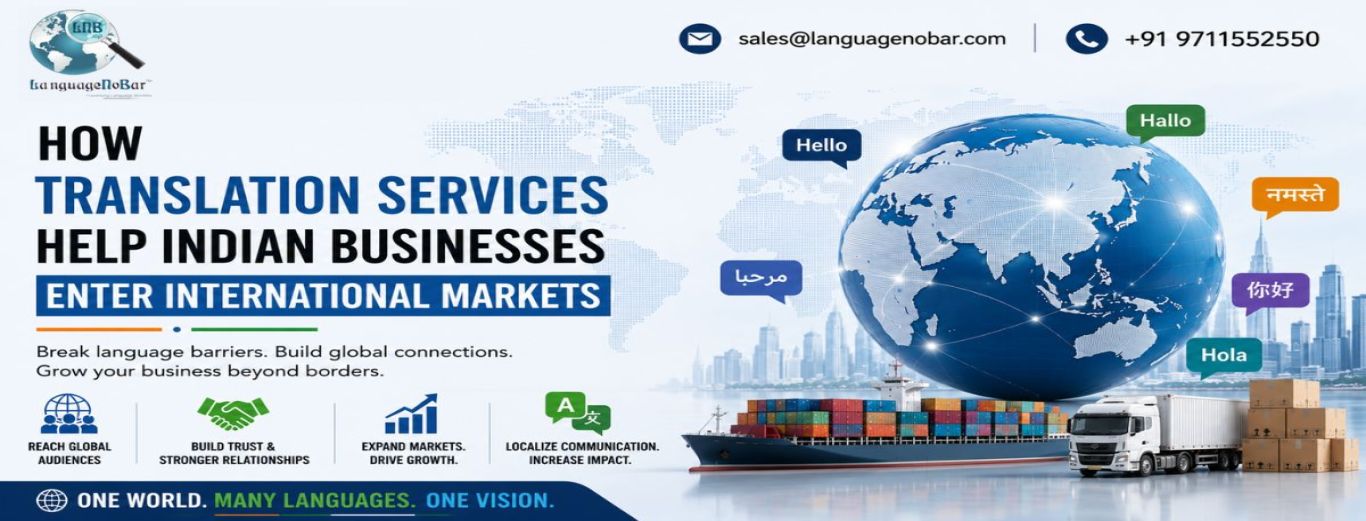
India has emerged as one of the most vibrant business and technology hubs in the world. Indian companies are increasingly looking to foreign markets for new customers and growth opportunities, in sectors ranging from manufacturing and pharmaceuticals to IT, e-commerce, education and professional services.
But entering an international market is not just exporting products or opening a website in another country. Businesses need to communicate effectively with customers, partners, regulators, employes and other stakeholders who may speak different languages and follow different cultural conventions.
Here is where Translation Services come into play with great importance in international expansion.
Professional translation can help Indian businesses communicate their products, services, documentation and brand messages across languages accurately. The right international marketing strategy, combined with translation and localization, can help companies create trust and deeper relationships with audiences around the world. Going Global: Indian Business
Indian companies are increasing their footprint in markets in North America, Europe, Middle East, Southeast Asia, Africa and elsewhere.
There are several reasons for this growth:
Growth of India’s tech and SaaS industry Increasing demand for Indian goods abroad Growth in e-commerce, digital companies Pharma & Healthcare Companies growth Global manufacturing & supply chain opportunities Increasing need for professional services in India Getting to more global customers thru digital platforms
Digital channels have made it easier than ever to reach customers all over the world, but language barriers can still be a huge communication obstacle.
A company may have a great product, competitive prices, and a solid website, but bad communication can make international customers wary to engage with the brand.
1. Translation Opens New Markets for Businesses
The most obvious advantage of professional translation is the ability to communicate with clients in their own language.
For instance, an Indian manufacturer entering a European market may need to translate product specifications, user manuals, technical specifications, safety data and marketing materials.
An Indian SaaS company wanting to go international might need translations for its website, user interface, help documentation, onboarding material and customer support materials.
It can be easier and more accessible to understand when spoken in the customer’s language
2. It builds confidence in international markets
Trust is especially crucial for a company entering a market in which the brand is not well recognized.
When key information is clear, professional and easy to understand, customers interact with a business more.
A bad translation can give the opposite impression. Poor grammar, incorrect terminology or vague language can make a company appear less professional.
Professional Translation Services help businesses maintain consistency and accuracy across customer-facing content.
This is especially true for industries such as healthcare, pharmaceuticals, finance, manufacturing, and technology where a minor misunderstanding can have grave consequences.
3. Translation and Global Marketing
Not all marketing messages are translatable from one language to another.
When Indian companies go global, they need to think about how the local people will perceive the message the brand is communicating.
All of these – website content, advertising, product descriptions, social media campaigns, email marketing, promotional material – need linguistic adaptation.
This is where translation and localization intersect.
Translation is the act of transferring meaning from one language to another; localization however considers the cultural and market specific expectations of the target audience.
A slogan that may appeal to consumers in India might not work in other countries. Professional linguists can be used by companies to ensure that the message they are trying to convey is correct, and the identity of the brand is not lost.
4. It makes websites around the world more effective.
Often a website is the first point of contact between an international customer and a business.
If you are targeting markets where most of your customers seek and consume information in other languages, simply having an English language website may not be enough.
Businesses can benefit from Translation Services to translate the important website contents such as:
Service and Product Pages
About Us Pages
Q&A
Technical docs Posts on Blog
Landing pages
Client Service
Terms and policies
For businesses that operate in more than one country, translated content can also support multilingual SEO strategies to improve visibility in local search results.
5. It helps Indian companies collaborate with international companies
Acquiring customers is not the only aspect of international expansion.
businesses must communicate with distributors, suppliers, investors, agencies, contractors and strategic partners.
You may need professional translation for business agreements, presentations, proposals, reports, training materials, correspondence, or operating documents.
Good communication can help to avoid misunderstandings and make international teams work more efficiently.
This makes Business Translation Services a must for Indian companies forming international alliances.
6. Translation Matters for Industry-Specific Needs
Different industries have their own jargon.
Highly specialized documents of a pharmaceutical company require more than general purpose of translation. But there are also engineering manuals, banking documents, software interfaces and medical materials. All of these demand translators with the appropriate terminology and subject knowledge.
Sectors that can benefit from industry-specific translation include: * Pharmaceuticals
Healthcare
Production
Banking and Finance
Information Technology
E-Commerce
Teaching
Legal assistance
Engineering
Media & Entertainment
Expertise assists businesses in keeping terminology consistency and reducing the chance of errors.
7. It helps with regulatory and compliance communication
However, regulatory requirements differ from market to market across the globe.
Depending on the industry and country, companies will need translated contracts, product information, compliance documents, certificates, instructions, labels, or other official documents.
Hence, companies entering regulated markets must identify prior to launch which documents require translation by a professional or certified translator.
A reliable Translation Company India can help the businesses to find the language requirements and deal with the multilingual documents as part of their expansion plan.
8. Consistent global branding thru translation
“The more markets you are in, the more important it is to have consistency in the brand,” he says.
Individual translators working independently can lead to variations in terminology, tone, and messaging.
Professional translation teams can develop terminology guidelines and ensure consistency for websites, marketing collateral, product documentation, and customer communications.
The Indian company can keep a known brand and still speak the language that appeals to local audiences.
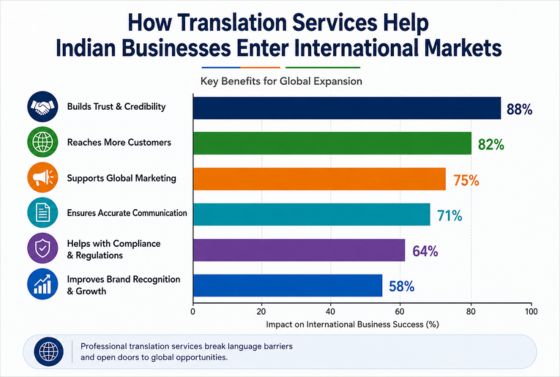
The selection of a translation partner is included in the strategy of international expansion.
When reviewing possible providers, businesses should consider aspects like:
Industry expertise
Find a provider who understands your industry and its language. Fluency in native language
Target language speaking linguist experts can assist in making translated content sound more natural to the target audience.
Systematic review and quality control can reduce errors and lack consistency.
How well does it scale?
Going internationally may require thousands or millions of words in multiple languages. You need a translation partner that scales your business.
Confidentiality and security Companies that work with sensitive business, legal, financial, medical or technical information should review the provider’s data-security practices.
Technology & workflow
Large multilingual projects benefit from translation management systems, terminology databases, translation memories, and quality-control tools to increase efficiency and consistency.
The translation must be part of the expansion strategy
Don’t wait until you’re in a foreign market to think about translation.
The language requirements should ideally be addressed at the planning stage for market entry.
It’s decision time for businesses.
1. Which countries do they want to target.
2. The languages of its customers.
3. What to Translate.
4. What materials need to be localized?
5. Which documents require certified or specialized translation
6. Long-term preservation of multilingual content
This helps companies deliver a more consistent international customer experience.
A professional Translation Company India can provide you much more than just converting language word to word.
The right partner can help companies manage multilingual content across their websites, documents, marketing campaigns, software, technical materials, and customer communications.
This enables Indian companies to grow into the global market because they can communicate with the different audiences while keeping the quality and the brand consistency.
Summarizing
International expansion presents huge opportunities for Indian companies, but communication is the key to successful global expansion.
Translation Services helps Indian companies connect with customers, establish trust, run marketing campaigns, handle business documents, fulfill language needs, and foster stronger ties with global partners.
It’s not just about translation. It’s about making your business something that people in new markets can understand, believe in, and approach.
For a company looking to go global, investing in professional language support can be a vital step in establishing a truly global business.
LanguageNoBar helps businesses break down language barriers and reach out to the world easily with professional multilingual solutions.