ISO 9001-2008, ISO 17100:2015 & ISO 27001 CERTIFIED
ISO 9001-2008, ISO 17100:2015 & ISO 27001 CERTIFIED
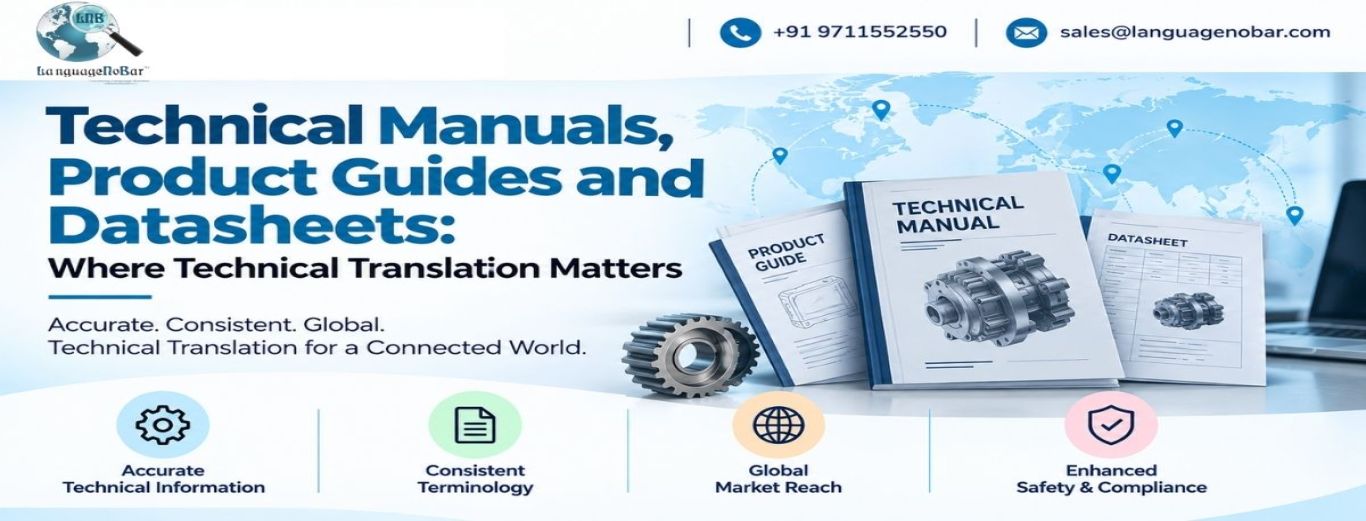
In the modern global market, technical information has to be translated accurately, consistently, and clearly in various languages. Manufacturers, engineering firms, technology providers, and industrial organizations routinely produce technical manuals, product guides, datasheets, installation instructions, and maintenance documents for their customers around the world. Poor translation of these materials can impact product performance, safety, compliance, and customer satisfaction—even if it’s a small misunderstanding.
This is where help comes with technical translation services. Technical translation is more than translating words from one language to another. This involves the expertise of subject matter experts, linguistic skills, terminology management, and the knowledge of the technical context of the content.
Technical manuals tend to contain information on product installation, operation, troubleshooting, maintenance, and safety. Users read these documents to learn how to use a product and how to deal with it.
A bad translation can lead to a bad installation or to the wrong use of the product. Such mistakes can be detrimental in manufacturing, engineering, electronics, automotive, healthcare technology, and energy spaces.
Technical translation is a professional service that ensures that instructions maintain their original meaning but read naturally in the new language. The translator must be able to understand technical terminology, measurements, specifications, warnings, and procedural instructions to provide reliable documentation.
Product Guides Need More than a Word-for-Word Translation
Product guides are developed to assist customers in understanding the product’s features, functions, benefits, and how to operate it. They can have some mix of technical jargon and customer-facing language.
A word-by-word translation might sound unnatural or confuse the reader. It's important to be technically accurate, but you also need to adapt the content to the language and cultural expectations of the target market. This is what professional translators do.
This is even more critical when product guides are being used in a number of international markets. The use of the same words all the time helps to make sure that the customers get the same information regardless of what language they speak.
Datasheets Matter – Precision, Precision
Datasheets are documents with lots of information. Often included are product specifications, dimensions, technical parameters, performance information, operating conditions, materials, and other important information.
Translation errors can be especially problematic because the datasheets contain the correct information. One wrong unit, one wrong technical term, one wrong decimal point can change the meaning of a whole spec.
Technical translation services Help organizations keep these documents accurate. Translators and reviewers can follow existing terminology and style guidelines to ensure technical information is consistent across translations.
Standardization of Technical Terminologies
Perhaps the greatest challenge of technical translation is the consistency of terminology. A particular component, process, feature, or technical concept should be referred to by the same approved term throughout a document and related documents.
For consistency, professional translation workflows can employ terminology databases, glossaries, and translation memories. This is more valuable when companies have hundreds or thousands of pages of technical docs.
Consistency in terminology improves brand communication as well. Customers get to learn product specific terms which makes it easier to read and navigate manuals and guides.
Global Manufacturing Translation
Manufacturers commonly ship products to many countries and regions. They may need their documentation in multiple languages to cater to their international customers, distributors, technicians, and service teams.
Technical translation can include a wide range of materials including:
Installation Instructions
Owner’s Manual
Product How-toss
Data sheets
Documentation of service
Care Instructions
Safety documentation
Technical documentation
Operating procedures
Technical Specifications
The translation of these materials allows organizations to successfully deliver product information to international markets.
Supporting safety and compliance
Technical documentation can also be important for regulatory and safety requirements. Some organizations may need to provide product information, warnings, instructions, or supporting documentation in certain languages, depending on the industry and target market.
Technical Translation – Professional technical translation is the only way to clearly communicate important safety messages and instructions. Translators should not treat warnings, labels, precautions and other critical information as normal text, but instead preserve the intent and importance of such material.
In highly regulated industries, an organization may need to conduct translation review, terminology validation, and other quality checks before publishing documentation.
Technical translation is more than just language skills. For example, a translator translating an engineering manual, a software guide, or an industrial datasheet has to know the terminology and concepts of the field.
Subject to matter expertise enables translators to grasp technical relationships and avoid misleading literal translations. It also helps them to identify inconsistencies and possible ambiguities during the course of translation.
A multi-step process of translation, editing, proofreading, and QA can provide additional confidence before publishing complex documentation.
Localization Increases Usability of Technical Content
Localization too is a component of technical translation. The difference between translation and localization is that translation is about the accuracy of the language, whereas localization is about adapting the content for the target market”.
Localization can comprise formatting conventions, measurement units, date formats, terminology preferences and other market-specific considerations depending on the document.
The translation should read naturally and be usable by the intended audience, while preserving the technical information of the source document.
Selecting the Best Technical Translation Partner
There are several factors' businesses need to consider when choosing a technical translation provider. Important things to look for are industry experience, terminology management, quality assurance processes, multi-lingual skills, and capacity to work with complex document formats.
A good provider knows that technical documentation is a never-ending process. New product versions, revised specifications, and updated manuals may require regular translation and updating.
With a good technical translation partner, organizations can have a consistent multilingual documentation system instead of translating each document as a stand-alone project.
Summary
Technical manuals, product guides, and datasheets are essential communication tools for companies worldwide. The goal is not only to inform users, but to empower users to properly utilize, understand, maintain, and evaluate products.
Technical translation services Help businesses to preserve the meaning, accuracy, and usability of technical content when translated from one language to another. Technical translation makes sure that complex engineering documentation, detailed product specifications, and other technical information are accurate, clear, and reliable for international audiences.
As more companies expand into international markets, quality technical translation is an important part of providing consistent customer experiences, supporting international operations, and communicating technical knowledge without language barriers.