ISO 9001-2008, ISO 17100:2015 & ISO 27001 CERTIFIED
ISO 9001-2008, ISO 17100:2015 & ISO 27001 CERTIFIED
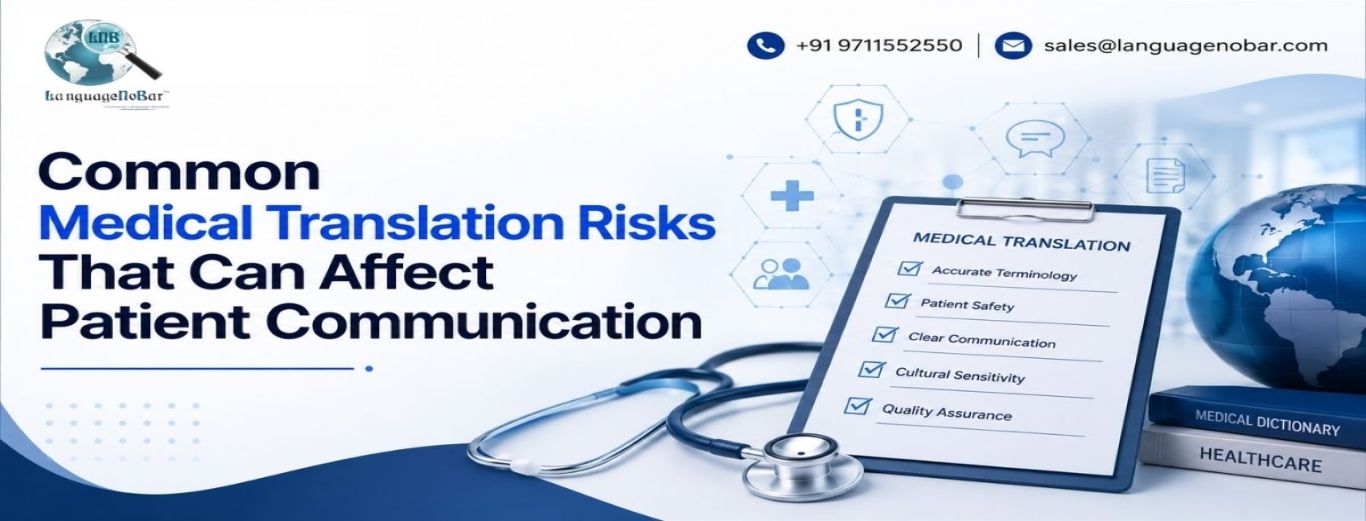
Medical translation is a key component of healthcare communication. Patients need to understand their diagnosis, treatment instructions, prescriptions, consent forms, medical reports, and other health care information in their own language. A small translation error can change the meaning of vital medical information and affect patient safety.
Professional medical translation services allow healthcare organizations, pharmaceutical companies, hospitals, clinics and medical device companies to communicate accurately, across languages. However, there are a number of risks associated with translating medical content without the right expertise and quality controls.
Specializing in a T is the language of medicine. There are many words with precise meanings that are difficult to express in a simple literal translation.
For instance, someone unfamiliar with medical terminology might misunderstand a clinical term, an anatomical reference, a diagnosis, or a treatment of instruction. This can result in patients and health professionals receiving the wrong information.
Medical translators should have a good knowledge of medical terminology and be fluent in source and target languages. In documents like clinical trial materials, medical reports, drug information, and patient education, it is particularly important to apply approved terminology consistently.
Of the most delicate areas in the medical translation are instructions for drugs. Dose, frequency, timing or method of administration can be dangerous.
For example, dosage instructions such as when to take medication, if medication should be taken with food or how often a treatment should be administered must be translated accurately and clearly. Numbers, units of measurement, abbreviations, and decimal points must also be carefully checked.
In the professional medical translation process, dosage information and other patient instructions must go through several quality checks.
Language and culture are one and the same. What sounds fine in one country may be confusing, inappropriate, or hard to understand in another.
Medical content may not only need to be translated linguistically but also culturally adapted. This means adjusting examples, phrases, illustrations, measurements, and styles of communication to make the information more relevant to the audience.
Culturally appropriate communication in patient-facing materials has been shown to improve understanding and increase comfort with health care information.
Medical reports are often very difficult to explain. They can generate technically correct sentences, but when translated too literally, the sentences are difficult for the patients to understand.
For example, informed consent forms should include risks, benefits, procedures, and patients’ rights. Important nuances can be lost in translation, and patients may not fully understand the information they are being asked to review.
The primary goal of medical translation is to retain the meaning of the original document and to translate it in a natural and understandable way for the target audience.
Consistency is key when you are dealing with large volumes of medical translation. A medical term can be presented several times in a document, a website, a clinical trial material or a patient information leaflet.
The same word can have different meanings. This is especially problematic when those documents are read by doctors, researchers, regulators, or patients.
Professional translation services Processes often include terminology databases, glossaries, translation memories, and human quality review to ensure consistency across projects.

Numbers are everywhere in medical documents (e.g. patient measurements, lab results, dosages, statistics, dates, clinical trial data).
Different countries may also have different conventions for dates, decimal separators, measurements, and units. A wrong translation of a number or a measurement can change a lot about the information that is meant.
Please pay attention to these details and don’t simply translate them by machine when you translate and proofread them.
Machine translation technology is increasingly useful, but medical content requires a high level of accuracy and context awareness.
Automated systems can translate grammatically correctly, but they lose the medical context, the medical terminology, the tone, and the subtle differences in meaning. This may be a special danger for prescriptions, clinical documents, consent forms, patient instructions, and regulatory documents.
Sensitive health care content should be translated by qualified human translators with appropriate quality assurance processes.
Medical records can contain sensitive patient information. Providers of translation services must treat data security and confidentiality with seriousness.
When translating, healthcare organizations need to think about how patient records, medical reports, clinical trial documents and other sensitive material is stored, transmitted and retrieved.
This risk of unauthorized access or disclosure can be minimized by a professional provider that has the right security procedures in place. Lack of quality assurance, the translation process must not end in the first draft. There is a need for a systematic quality assurance to detect errors in medical content in terms of terminology, omissions, formatting problems, inconsistencies in numbers, and language.
A good process could be translation, editing, proofreading, terminology and final review. The content might also involve the subject matter expert.
Medical translation services is more than simply translating from one language to another. It takes linguistic knowledge, medical knowledge, detail-oriented skills, cultural sensitivity, confidentiality, and strict quality control.
Professional medical translation services help organizations translate medical reports, clinical trial documents, pharmaceutical content, patient education content, informed consent forms, medical device documentation and other healthcare content accurately and consistently.
Open communication allows patients to understand their healthcare information and make informed choices. Professional medical translation services can support healthcare organizations working across languages and markets to ensure quality communication and patient safety.
Medical translation mistakes can have consequences beyond just misunderstanding language. Mislabeling, directions on dose, numbers, cultural references, or even information about the patient can affect how healthcare information is interpreted and acted upon.
However, if you use professional medical translators and have strict quality assurance procedures in place, risks can be considerably reduced. Professional medical translation services can help ensure that important information is accurate, clear, and meaningful in multiple languages for hospitals, pharmaceutical companies, medical device manufacturers, clinics and healthcare organizations.